Case study/Professional
Alock
A secure, distributed file storage and sharing app for seamless, encrypted transfers across desktop and mobile devices...
Built with
 AWS
 MUI
 Rust
 Azure
 Ionic
 Redux
 Tauri
 Docker
 Node JS
 Wasabi
 Fastify
 MongoDB
 React JS
 Rabbit MQ
 Socket IO
 TypeScript
The story
Role
Frontend Engineer.
Description
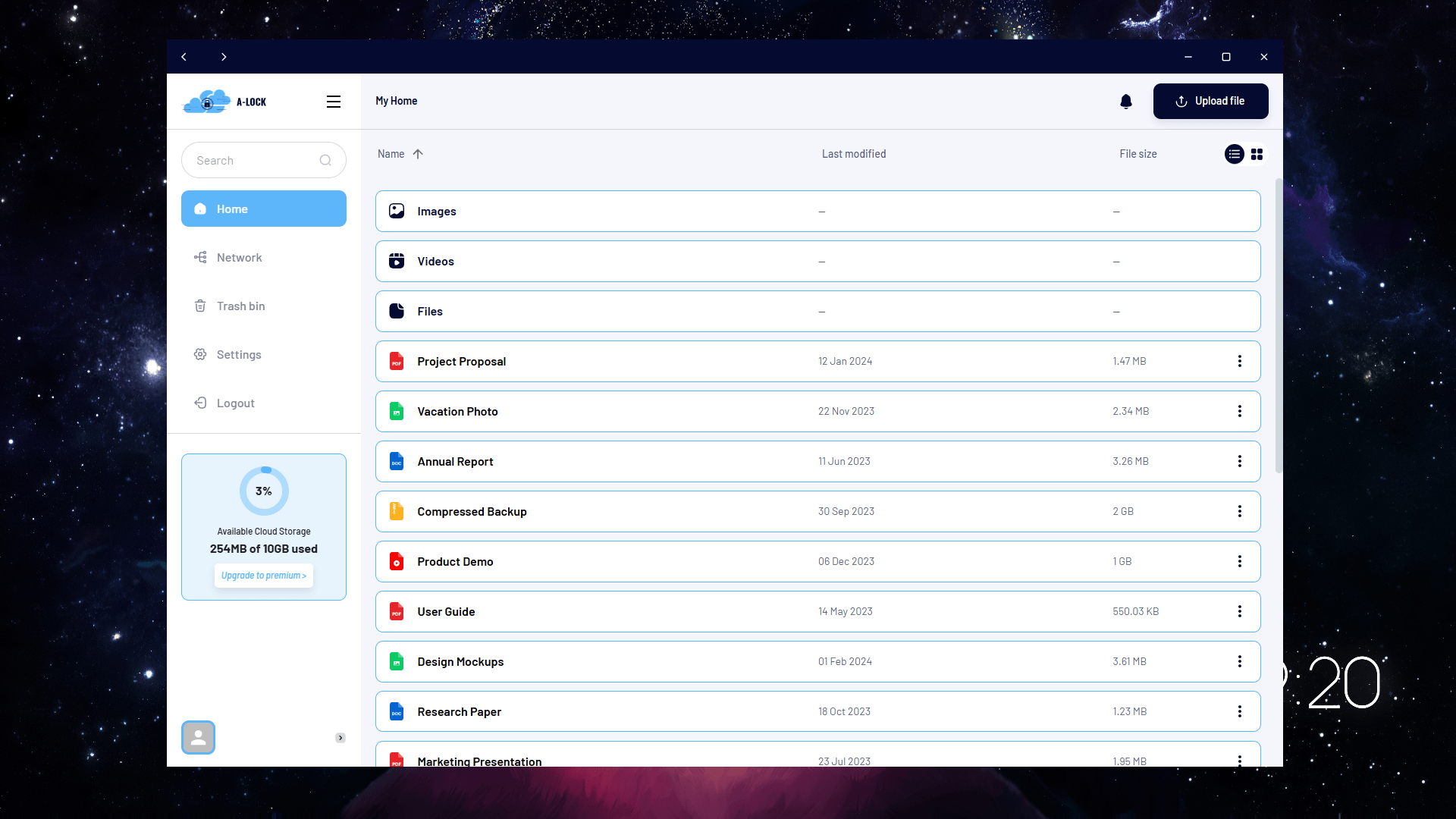
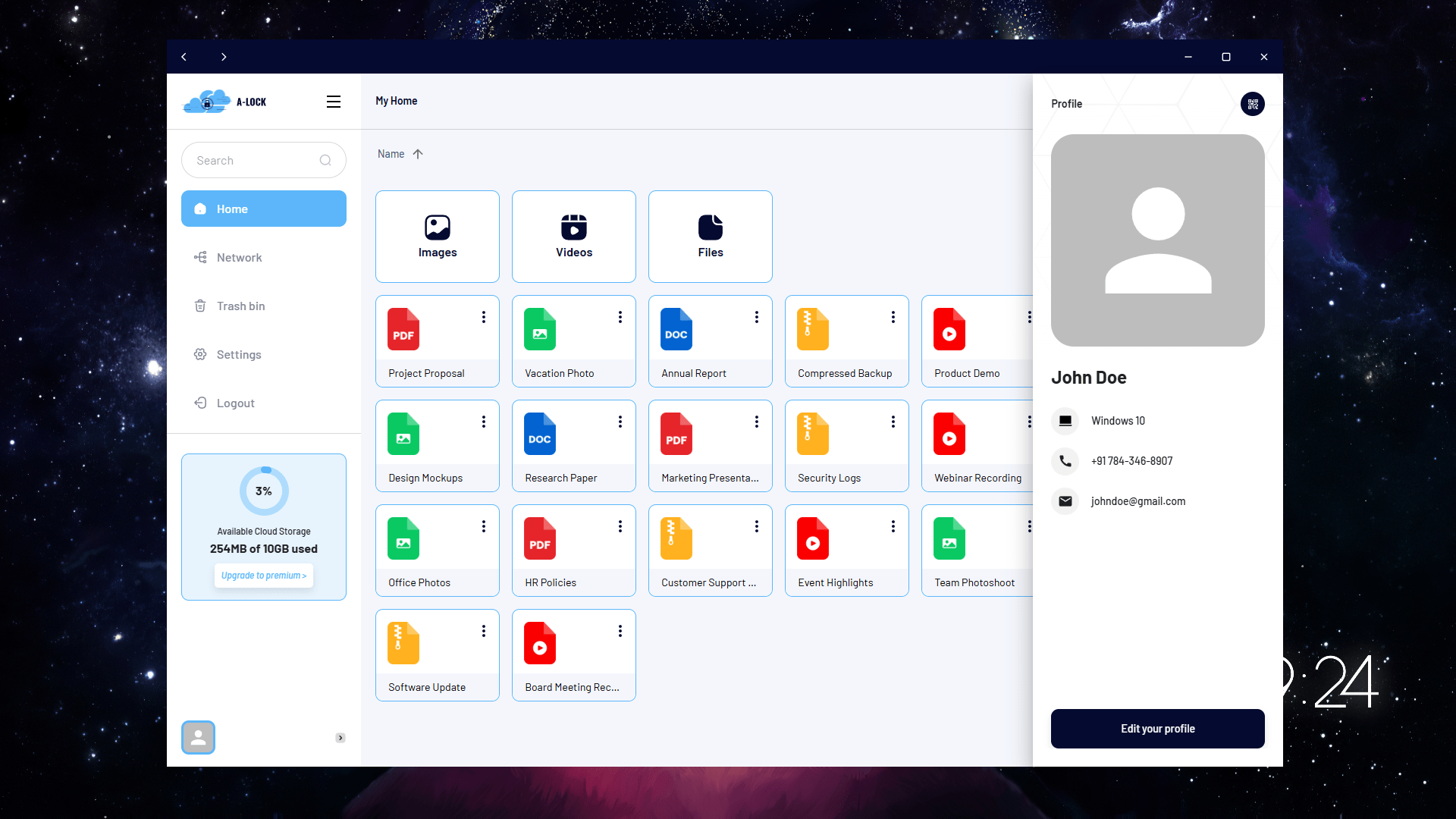
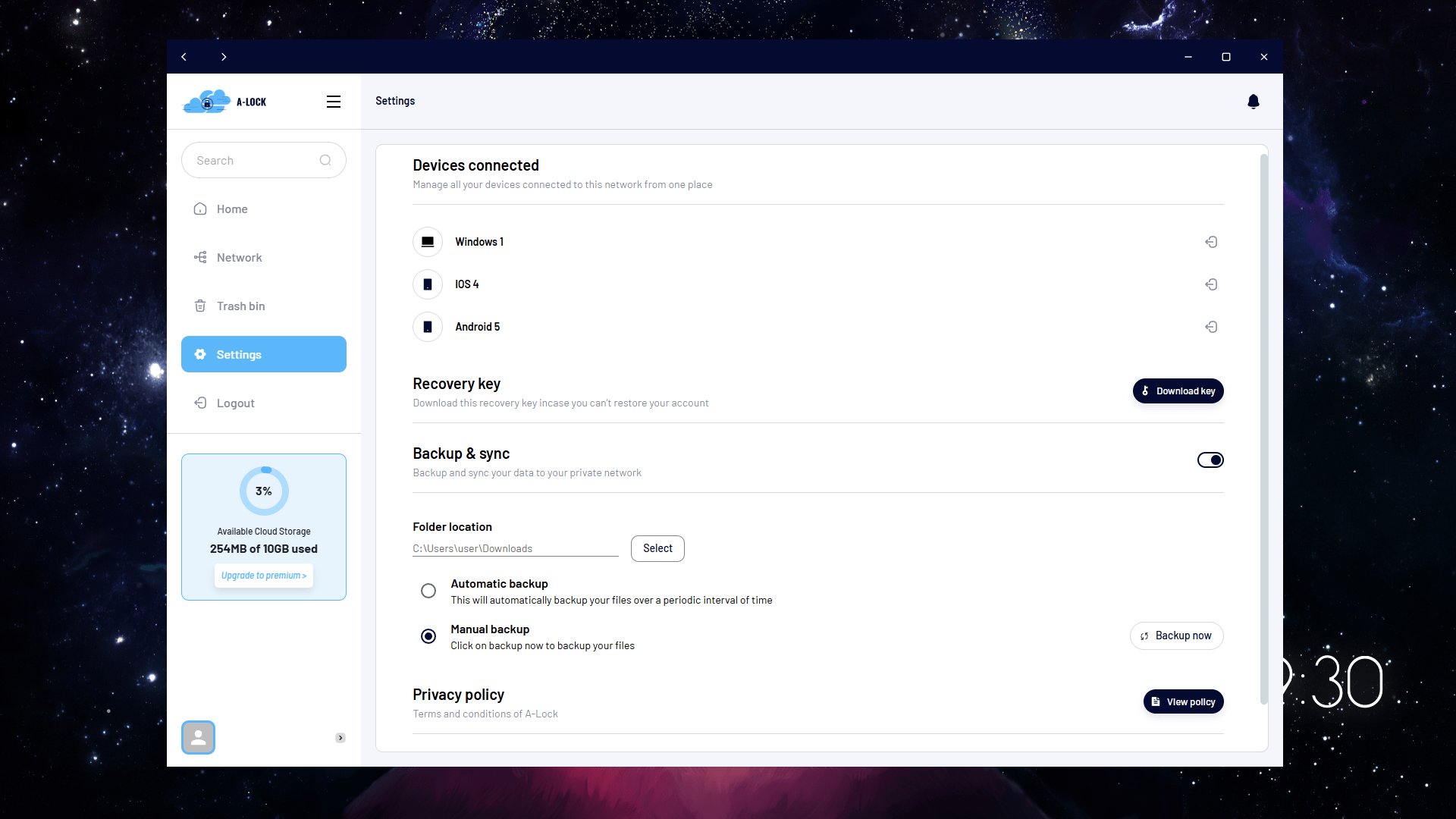
Alock is revolutionizing file storage and sharing with a secure, efficient, and seamless platform for desktop and mobile devices. By leveraging cutting-edge distributed storage technology, Alock ensures your files are always recoverable, no matter what. Advanced compression and state-of-the-art encryption safeguard your data while optimizing storage, making sharing between devices fast and effortless. Alock isn’t just a tool—it’s the future of secure, decentralized, and intelligent file management.
Tech Stack
Frontend: Tauri (desktop), React, MUI, Typescript, Rust, Redux, Ionic (mobile), Socket IO Client.
Backend: NodeJS, Fastify, Rabbit MQ.
Cloud: Azure, AWS, Wasabi.
DevOps: Docker.
Database: MongoDB, Gun JS.
Responsibilities
Implementing the Figma UI design for the desktop application.
Setting up custom hooks for application wide authentication.
Implementing a queue solution in combination with web workers to upload large files without blocking the main thread.
Implementing custom styled components with MUI.
Seamless integration of API's across the application.
Impact
Translated Figma designs into a flawless, pixel-perfect desktop application, ensuring strict adherence to semantic best practices and accessibility standards. This resulted in a highly polished, intuitive, and inclusive user experience that sets a benchmark for quality.
Developed a robust, application-wide custom hook using React's Context API to manage user authentication seamlessly. This solution enhanced scalability, reduced redundancy, and ensured a secure, unified state management system for logged-in users.
Designed an advanced solution to handle large file uploads by implementing file chunking and a task queue within web workers. This eliminated UI freezes and stuttering, significantly enhancing performance and ensuring a smooth and responsive user experience under heavy load.
Created a reusable, scalable library of custom-styled components with MUI, ensuring design consistency and accelerating development timelines.
Seamlessly integrated APIs using React Query and Axios, eliminating reliance on local component state for data management. This approach improved performance, simplified the codebase, and established a clean, maintainable architecture.